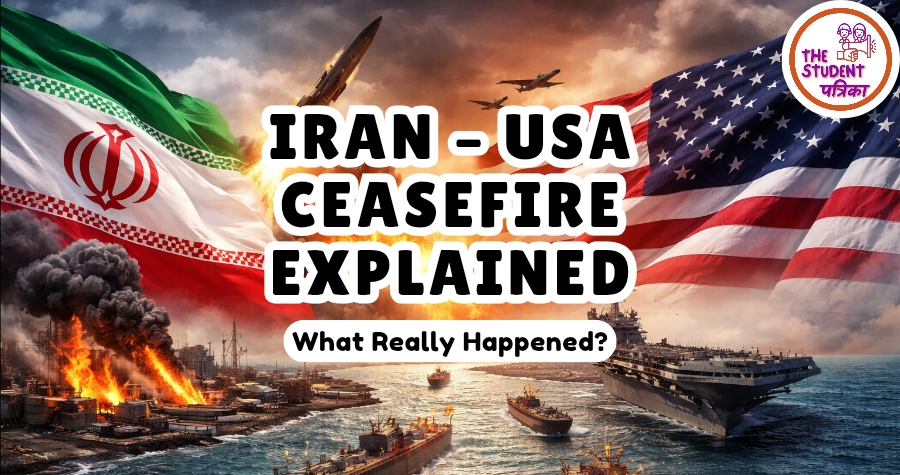
Iran–US Ceasefire After 40 Days of War: What Really Happened and Why It Matters to the World?
For nearly 40 days, the world watched nervously as tensions between Iran, the United States, and Israel escalated into one of the most dangerous geopolitical crises in recent history. Oil prices surged, global markets fell, and there were real fears of a wider war that could disrupt everyday life across continents.
Then, almost suddenly, came the announcement: a ceasefire agreement. But if you think the story ends there, it doesn’t.
The 40-Day Conflict That Shook the Global Economy:
The war began in late February 2026, after coordinated military strikes by the United States and Israel on Iranian targets. Iran responded aggressively - especially by targeting one of the most critical chokepoints in the world: the Strait of Hormuz. This narrow waterway handles roughly 20% - 25% of global oil supply, making it one of the most important trade routes on the planet. When Iran effectively blocked this route, the consequences were immediate:
- Oil prices surged
- Global markets lost trillions in value
- Shipping traffic through the strait dropped dramatically
According to reports, tanker movement almost stopped entirely at one point, highlighting how fragile global supply chains really are. Even food prices were expected to rise globally due to increased transportation and fuel costs. This wasn’t just a regional conflict—it was a global economic shock.
The Ceasefire: A Last-Minute Deal!
The turning point came just hours before a major escalation. At the last moment, diplomacy intervened, with 90 minutes on Donald Trump's "a whole civilisation will die tonight" clock - early Wednesday, as part of which Iran agreed to re-open the Strait of Hormuz, potentially restoring global energy supplies.
A two-week ceasefire agreement was reached between the US and Iran, with support from international mediators like Pakistan. Under the deal:
- Iran agreed to allow safe passage through the Strait of Hormuz
- The US agreed to pause military action for two weeks
- Talks for a longer-term agreement were initiated
Trump described the development as a “big day for world peace,” while also making it clear that US forces would remain present in the region. However, Iran emphasized that this was only a temporary pause - not the end of the conflict. The focus now shifts to scheduled talks in Islamabad.
Why Oil Prices Fell So Quickly?
One of the most immediate effects of the ceasefire was seen in oil markets.
- Brent crude dropped sharply to around $95 per barrel after the agreement
- Prices had previously crossed $110 per barrel during peak tensions
- In some reports, oil saw a 13% - 15% single-day drop, one of the steepest declines in decades
This dramatic fall happened because markets suddenly expected oil supply to stabilize again once the strait reopened. But here’s the important part: Prices are still higher than before the war. And the situation remains uncertain
The Strait of Hormuz: The Real Battlefield!
To understand why this conflict mattered so much, you need to understand one thing: The war was not just about territory or politics - it was about control over global energy flow. The Strait of Hormuz connects the Persian Gulf to the open ocean. Countries like India, China, and Japan rely heavily on oil passing through this route. When Iran blocked it:
- Shipping costs skyrocketed
- Insurance premiums increased
- Energy security became a global concern
At one point, more than 150 ships were stranded due to the crisis. This is why even a temporary reopening had such a massive impact on global markets.
The Bigger Issues Behind the War:
The ceasefire may pause the fighting, but it does not resolve the core issues. The conflict involved several deep-rooted tensions:
- Iran’s Nuclear Programme: The US and Israel have long expressed concerns about Iran’s uranium enrichment and potential nuclear capabilities.
- Regional Power Struggle: Iran, Israel, and the US are competing for influence in the Middle East.
- Economic Control: Control over oil routes and energy supply remains a major strategic factor.
Even during ceasefire talks, disagreements over nuclear policies and sanctions continued to create uncertainty.
Is the War Really Over?
The short answer: No! The ceasefire is temporary and fragile.
- It is limited to two weeks
- Both sides have conditions
- Military presence in the region continues
Iran has warned it could resume action if provoked, while the US has maintained readiness for further intervention. Even Israel has indicated it may continue operations against allied groups in the region. This means the situation can change quickly.
In the event of a ceasefire violation - Israel, for example, has already claimed Iran fired missiles at it this morning - Trump will likely pivot sharply to pre-ceasefire rants about destroying Iran. He has repeatedly said he is willing to step up attacks on public and energy infrastructure, and has waved aside civilian casualties, referring to Iranians as "animals" and "crazy ba****ds". A ceasefire violation leading to renewed fighting could also quickly escalate to a 'boots on the ground' scenario, something the US seemed to be on the brink of before hostilities ceased.
Therefore, the immediate test for this ceasefire is the next 24 hours. If Iran, the US, and Israel can control their trigger fingers, the first round of talks will begin on a positive note.
A Temporary Pause, Not Peace
The Iran - US ceasefire is not the end of the conflict - it is simply a pause in a much larger geopolitical struggle. What this 40-day crisis has shown is how deeply interconnected the world has become. A conflict thousands of kilometres away can influence fuel prices, stock markets, job opportunities, and even the cost of daily essentials. The situation remains fluid, and the coming weeks will be crucial in determining whether this ceasefire turns into lasting stability or another phase of escalation.
Stay Informed, Stay Ahead: If there’s one takeaway from this entire episode, it’s this: Understanding global events is no longer optional - it’s essential.
At Student Patrika, we break down complex topics like geopolitics, economy, careers, and policy into simple, practical insights that actually help you make sense of the world. If you found this useful:
- Follow us for more such explainers
- Share this article with someone who wants to understand global news better
- Keep checking in for updates as this story develops
Because in today’s world, being informed is one of the most valuable advantages you can have!
Related Post

Comments
Advertisement